


0+
0+
Product delivered
02
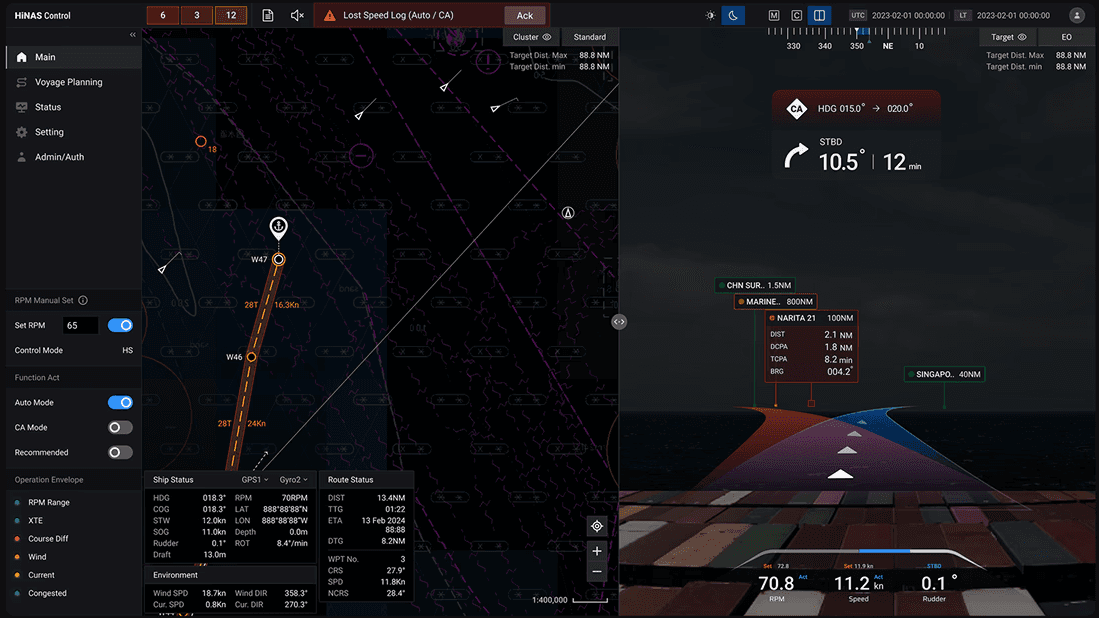
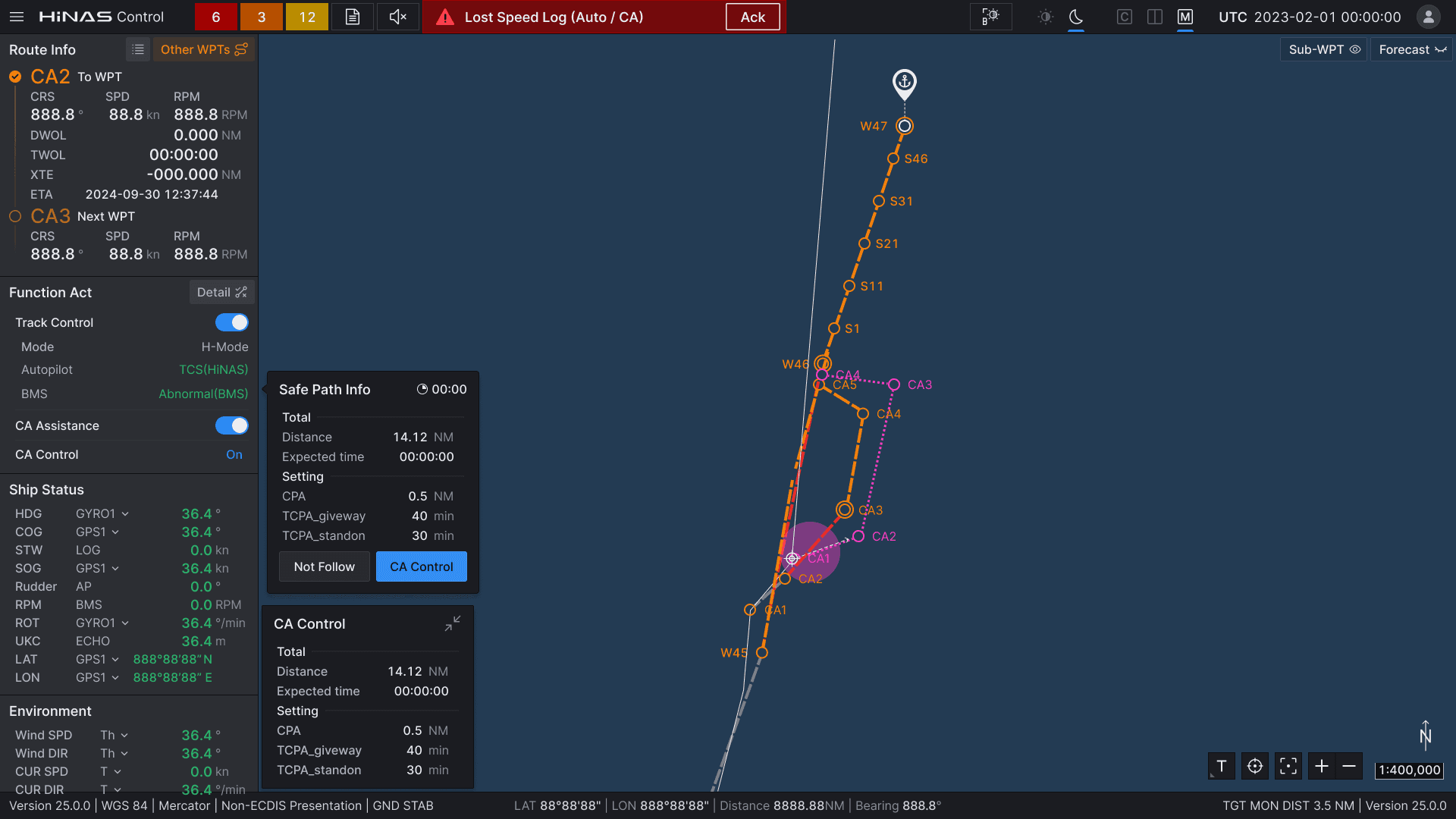
Collision avoidance
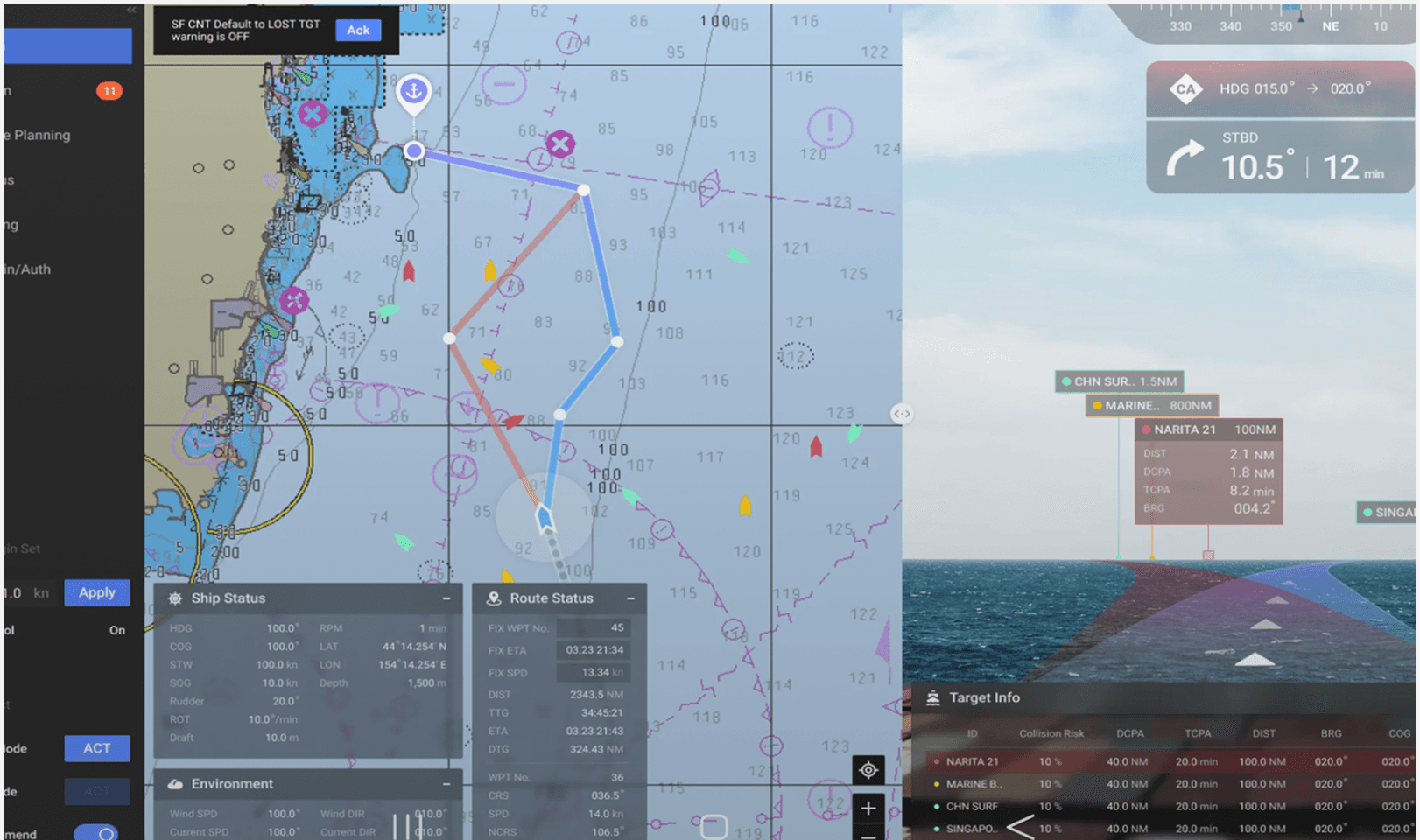
Automatically adjusts course and speed to prevent collisions.
03
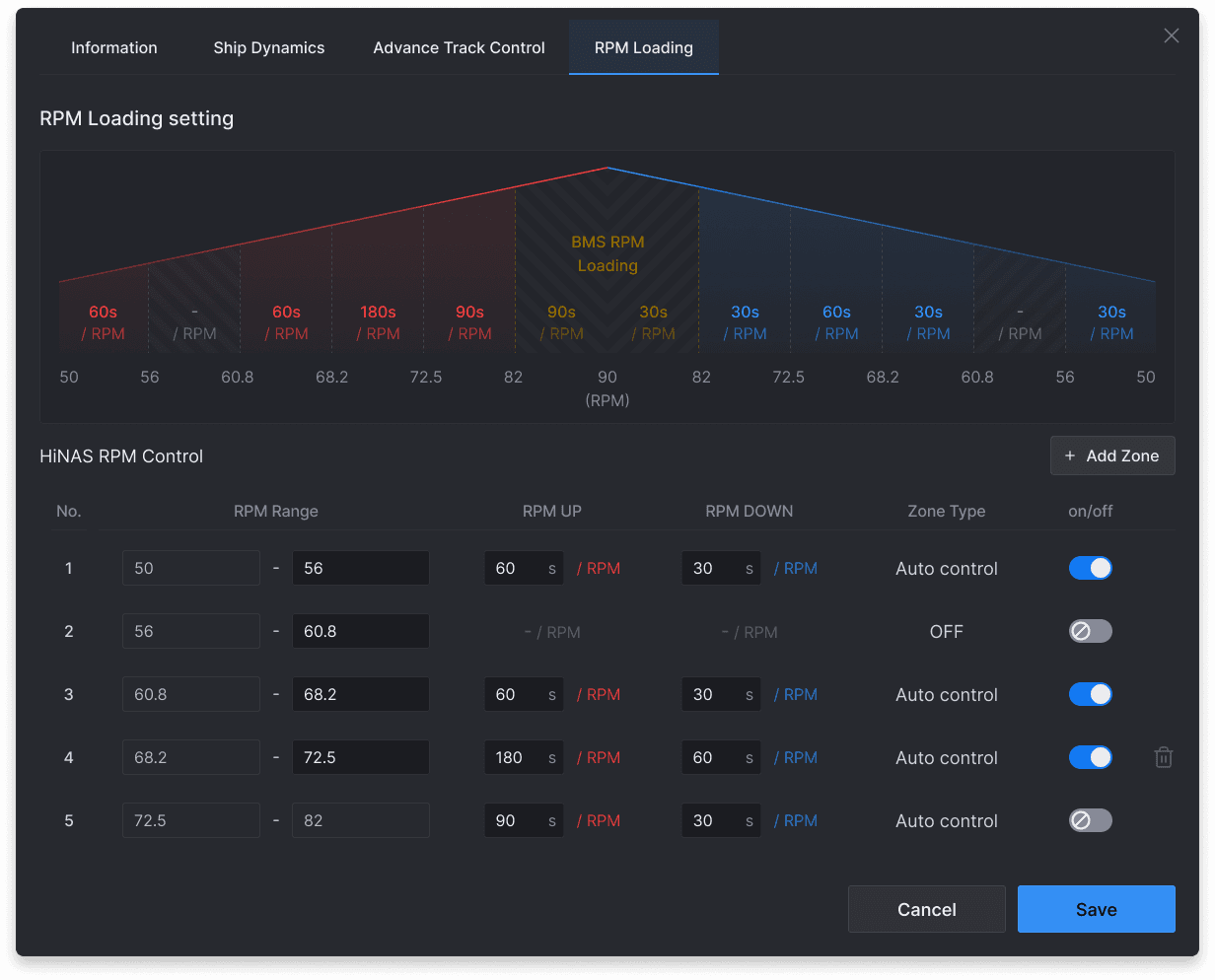
RPM Optimization
Continuously optimize speed and route via an interfaced autopilot, reducing fuel consumption by up to 15%.
What is HiNAS Control?
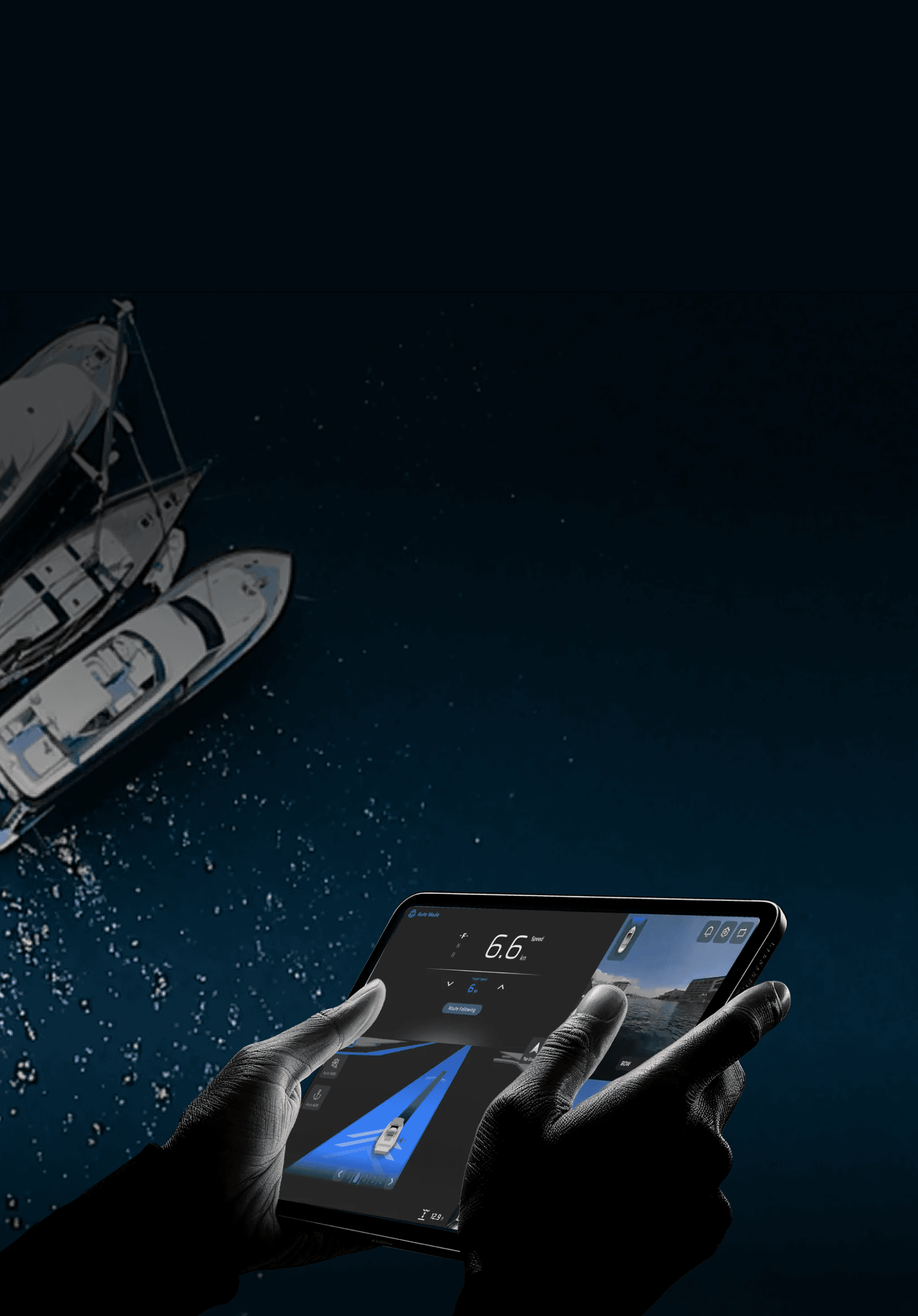
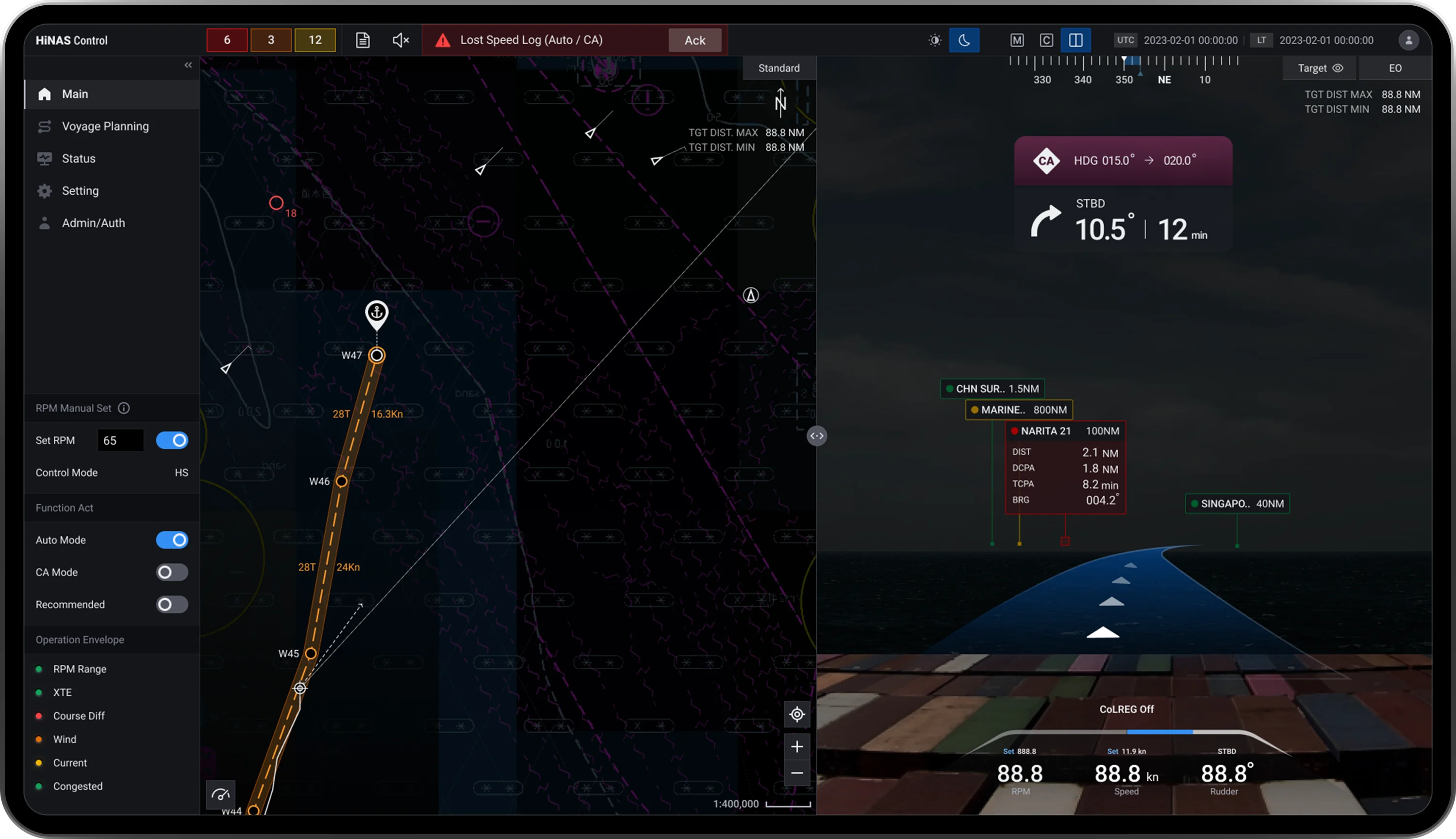
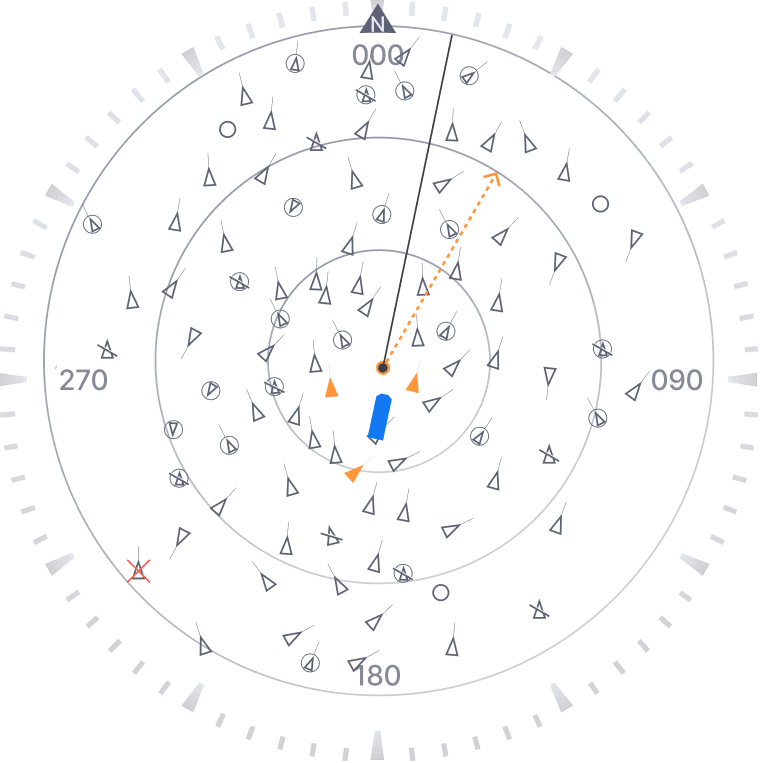
HiNAS Control is an advanced, AI-powered autonomous navigation assistant system. It automatically recognizes surrounding vessels and obstacles, calculates the safest and most efficient routes, and directly controls the ship's heading and RPM to assist the crew in enhancing safety and efficiency of the vessel's voyage.
How does it save fuel, and how much can be saved?
The AI analyzes real-time variables such as weather forecasts, ocean currents, vessel dynamics, and loading conditions to optimize the engine's RPM. Instead of maintaining a fixed speed, it dynamically adjusts the engine output to match the environment, resulting in 3–8% fuel cost savings depending on voyage, vessel, and weather conditions. These savings are verified by ABS following the international ISO 17741 methodology.
Is dry-docking required to install the system on an existing vessel?
No, dry-docking is not required. The system is designed for an easy retrofit, and the entire installation and integration process can be completed in about three days at a port, minimizing any disruption to the vessel's operational schedule.
Can the captain or crew leave the bridge while the system is active?
No. HiNAS Control is a "Level 2" autonomous assistive system designed to reduce workload, but the ultimate responsibility remains with the human operators. A certified officer must always be present on the bridge to maintain a safe navigational watch, and they can instantly easily override the system to take manual control in an emergency. We always keep your crew in the loop.
Does the system operate safely at night or in poor visibility conditions?
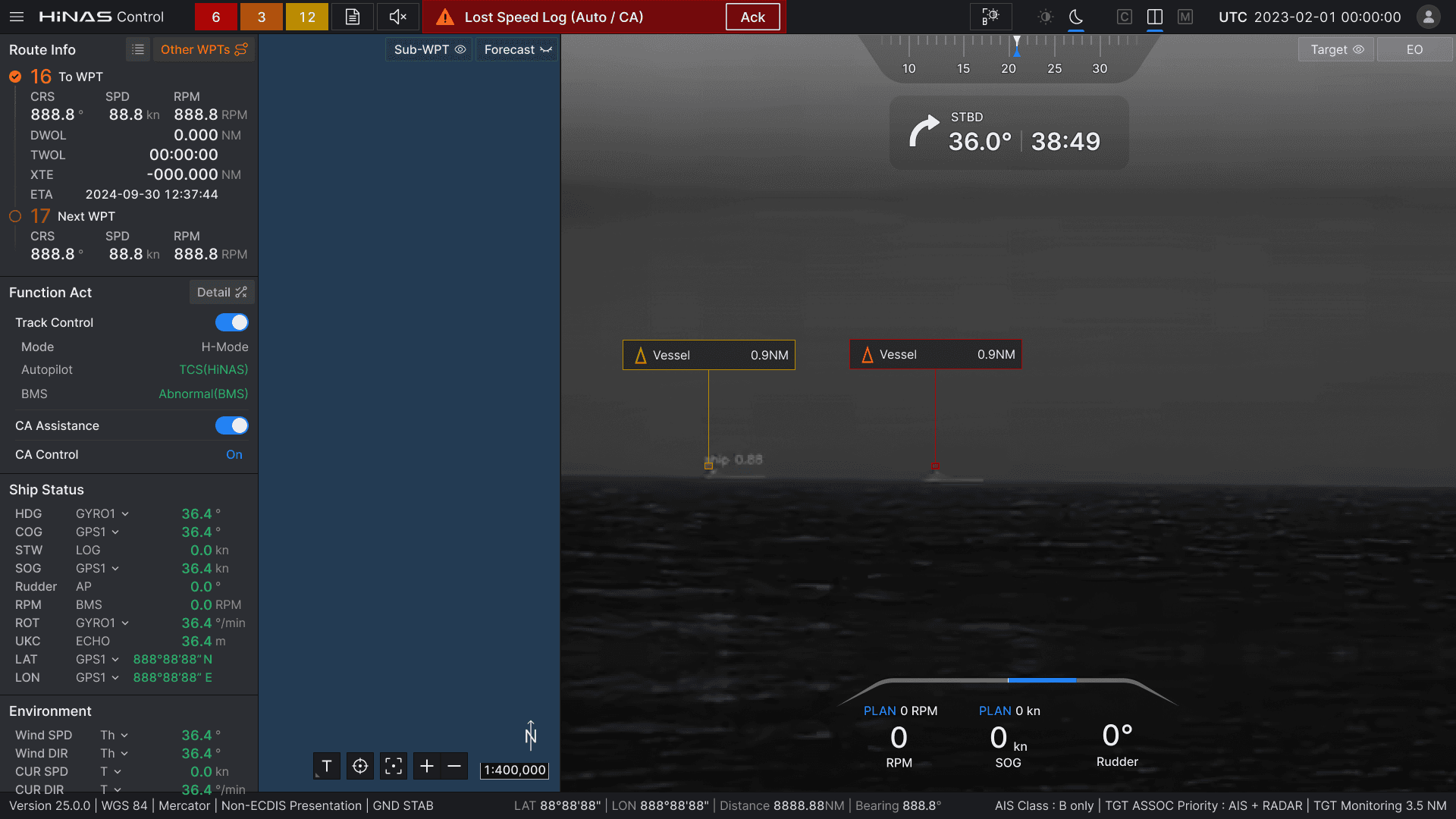
The system does not rely solely on standard optical cameras; it utilizes Sensor Fusion technology that combines data from Infrared (IR) thermal cameras, Radar, and the Automatic Identification System (AIS). This ensures the AI can accurately detect surrounding objects and help prevent collisions even in the dark or during dense fog.